
 ChatGPT
  Perplexity
  Gemini
  Claude AI
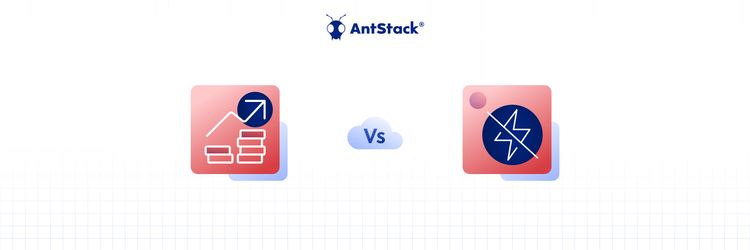
 The CFO demands cloud cost reductions to protect margins. The engineering team argues that these cuts will stall the transformation and affect performance.
The result? Trade-offs: performance versus prudence, innovation versus savings.
What’s lost in this debate is the larger picture about modernization maturity.
Organizations chasing immediate savings without addressing architectural debt are optimizing yesterday’s problems. True value lies not in shrinking cloud bills, but in reshaping how the enterprise leverages the cloud to scale, innovate, and compete.
Cost-cutting alone Is Often Ineffective and Risky
The push for cost-cutting often triggers reactive decisions, turning off capacity, delaying upgrades, or pausing innovation initiatives. What follows is operational fragility, growing inefficiencies, and hidden costs that impact performance over time.
In most organizations, cloud now represents one of the largest lines in the OPEX budget. CFOs demand predictability and reductions; engineering teams push back, aware that blunt cuts create instability. This tension persists because the cloud is treated as a line item to compress, not as an evolving platform for cloud-native modernization.
The real problem emerges when optimization becomes synonymous with reduction:
- Overprovisioned resources remain untouched because re-architecting takes time
- Data transfer fees and inefficient workloads quietly inflate costs
- Lack of a FinOps framework obscures true accountability and usage patterns
This doesn’t lead to fiscal discipline, but deferred risk.
The Right Question Is How to Combine Both Strategically
And the answer is - Modernization.
When organizations stop treating cloud optimization as a zero-sum game between finance and engineering, the path forward becomes clear. Modernization ensures that cost efficiency, performance, and scalability coexist by design.
Here’s how?
1. Right-sizing and modern instance families
Modernizing workloads often includes migrating to newer cloud instance types like AWS Graviton processors. These architectures are optimized for throughput and efficiency, offering better price-performance ratios while enhancing reliability.
Right-sizing means choosing the optimal instance size and family for each workload rather than overprovisioning with legacy or outdated instances.
2. Refactoring legacy services
Monolithic apps running on oversized VMs eat cloud budgets. Refactoring them into microservices, serverless functions, and containerized components allows you to “pay for what you use”.
This reduces complexity and technical debt, increases agility, and aligns costs tightly with actual workloads.
3. Eliminating waste systematically
Idle dev environments, forgotten snapshots, and over-provisioned clusters quietly inflate cloud bills month after month. Legacy system modernization introduces automated lifecycle policies that identify and decommission recurring wastes, eliminating surprise bills.
4. FinOps with engineering buy-in
Modernization succeeds when financial management teams and engineers collaborate closely. When costs are tagged by workload, feature, or environment, accountability becomes clear. Teams see the financial impact of architectural choices.
5. Experiment, measure, adapt
Modernization is best done in phases: run pilots, monitor impact, adjust. This cycle of experimentation ensures modernization aligns with real workloads and measurable ROI.
Cost savings become a byproduct of building a better system, not a tax on engineers.
| Aspect | Cloud Cost Cutting | Cloud Modernization | Strategic Integration |
| Focus | Immediate expense reduction | Upgrading systems for cloud efficiency | Long-term value by combining both |
| Typical Results | Short-term savings, possible waste | Sustainable cost optimization, agility | Continuous cost control, innovation fuel |
| Risks | Legacy inefficiencies persist | Higher upfront investment | Requires planning and governance |
| Key Benefits | Lower bills (sometimes partial) | Better performance, reduced technical debt | Cost visibility, automation, agility |
The ROI of Modernization on Cloud Cost Optimization
Modernization doesn’t just shrink the cloud bill; it compounds value across the organization. It reshapes how teams build, ship, and scale technology while creating measurable financial predictability.
1. Improved developer velocity
By automating infrastructure management through serverless and container orchestration, developers spend less time on maintenance and more on innovation. Faster release cycles lead to quicker product rollouts and shorter time-to-revenue.
2. Better user experience
Auto-scaling ensures performance consistency even during unpredictable traffic surges. Fewer latency spikes and outages directly improve user satisfaction and customer retention.
3. Greater flexibility for AI/ML and data adoption
Modernized workloads integrate seamlessly with emerging AI, analytics, and data platforms. This unlocks faster experimentation, scalable model deployment, and more intelligent business operations, without costly rework.
4. Predictable cost and performance
Auto-scaling, observability, and workload-aware provisioning convert variable spend into manageable, forecastable patterns. The result is financial clarity for CFOs and operational consistency for engineering teams.
Conclusion: Proactive Cost Optimization in Modernization Roadmap
The real question isn’t how much can we cut? It’s how can we modernize to run smarter, faster, and more efficiently, while keeping costs under control?
True cloud cost optimization happens when finance, engineering, and operations operate in sync. It’s about identifying inefficiencies before they spiral into surprises and embedding continuous accountability into your modernization journey.
This is how you can do it:
Identify cost drivers
- Which workloads or services consistently inflate your bill?
- What unused capacity or orphaned resources are still active?
Pinpoint inefficiencies
- Where are you over-provisioned?
- Which applications can scale down or re-architect without disrupting business continuity?
Map your modernization journey
- Move legacy systems to SaaS where viable
- Replatform what needs elasticity
- Refactor high-impact services for long-term efficiency
Operationalize optimization
- Prioritize small wins
- Automate routine scaling and lifecycle tasks
- Phase out legacy components that drain both cost and agility