Building a Scalable, Serverless Integration Engine for Food Delivery Platforms
AntStack built a centralized, serverless engine to sync menus and orders for 3,000+ stores, using AWS.
AntStack built a centralized, serverless engine to sync menus and orders for 3,000+ stores, using AWS.
AntStack built a centralized, serverless engine to sync menus and orders for 3,000+ stores. Using AWS, they achieved zero-server management and 90-second failover, making complex delivery logistics invisible and scalable.
Overview
The QSR industry relies on speed, but managing third-party delivery platforms like DoorDash and UberEats created a massive systems problem. Each platform uses different APIs and data models, making it difficult for brands to sync menus, pricing, and real-time availability across thousands of locations. AntStack designed a centralized integration engine to bridge the gap between internal restaurant systems and external platforms. This solution ensures that every order, menu update, and status change is handled reliably at a massive scale.
Technology







Scopes
3000+
Stores Deployed
0
Server Management
90
Second Auto-Failover
Traditional systems struggled with operational drag.
The goal was to build a graceful, event-driven system that operates continuously at scale without maintenance windows.
Event-Driven Core: Used Amazon EventBridge and SQS to decouple components, allowing the system to absorb sudden traffic spikes instantly without manual intervention.
Stateful Orchestration: AWS Step Functions manage multi-step menu pushes and order injections, making complex execution paths visible and reliable.
Multi-Region Resilience: Deployed DynamoDB Global Tables and DNS-based failover to ensure high uptime and automatic recovery during regional outages.
The Antstack team played a significant role in overcoming the challenges
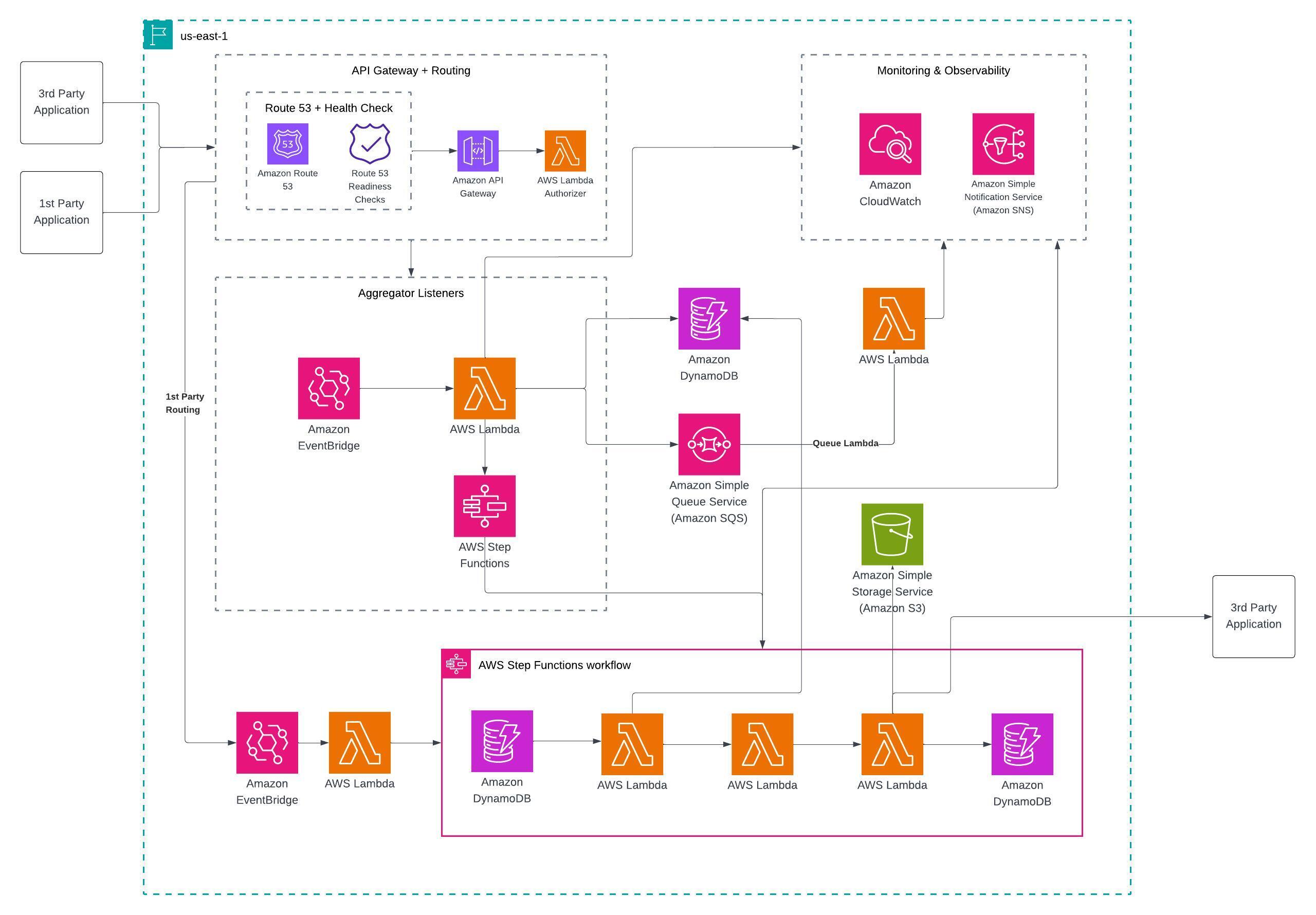
Caption 1.1: This image shows the end-to-end architecture of the Integration Engine

Rethinking your architecture?
Get in touch with us Rethinking your architecture? Let's bring clarity and serverless expertise to the table. From scaling smarter to building serverless-first, if you've got a challenge, we're ready to solve it. Let's talk about what's next.

Jeevan Dongre (JD)
CEO & Co-Founder
Connect

Prashanth HN
CTO & Co-Founder
Connect


These cookies are used to collect information about how you interact with this website and allow us to remember you. We use this information to improve and customize your browsing experience, as well as for analytics.
If you decline, your information won’t be tracked when you visit this website. A single cookie will be used in your browser to remember your preference.

